
Havana, Day 2

Started out with fruit, the world’s best breakfast, in this case tropical fruit; see yesterday’s Substack for photo. Then headed into Old Havana.
First glitch: gas station was closed. The gas stations have open and closed days, and there’s a website where you make reservations to get on the line at a certain time. No reservation, no gas for you; your local gas station has hit its reservation limit, no gas for you. For us this wasn’t a disaster. It meant we had to walk a few blocks farther to a hotel to find a cab, which we did. For the taxi drivers, it’s obviously a catastrophe. No gas means no fares, but if you get gas, you might not have a good day anyway, because tourism is way down. Monty, whose apartment this is and whose Spanish is excellent, had a lively conversation with the cab driver all the way to Old Havana about the way the US is making life harder is Cuba. The driver, like pretty much everyone we’ve been meeting, was warm and humorous. No one seems to blame us, just the jackass in the White House.
In Old Havana the joint was oddly jumping. Very few tourists, but Cubans out shopping, strolling, talking, hanging out. Kids playing soccer on the cobblestones. Dogs and cats. We strolled, too, with a couple of places in mind. One was the home/gallery of an art collector and dealer, who’ll figure in one of the books I’m planning. This guy owns a tremendous amount of Cuban art from the 1950s, ‘60s, and ‘70s, plus the sculptures his father made, and a whole lot of other stuff. This is all hidden behind a door on Calle Obispo and you’d never know it. Because I’m using him in the book, and not telling him that, the least I could do was buy a print. (No, I’m not going to tell you how I’m using him. That would give stuff away!)
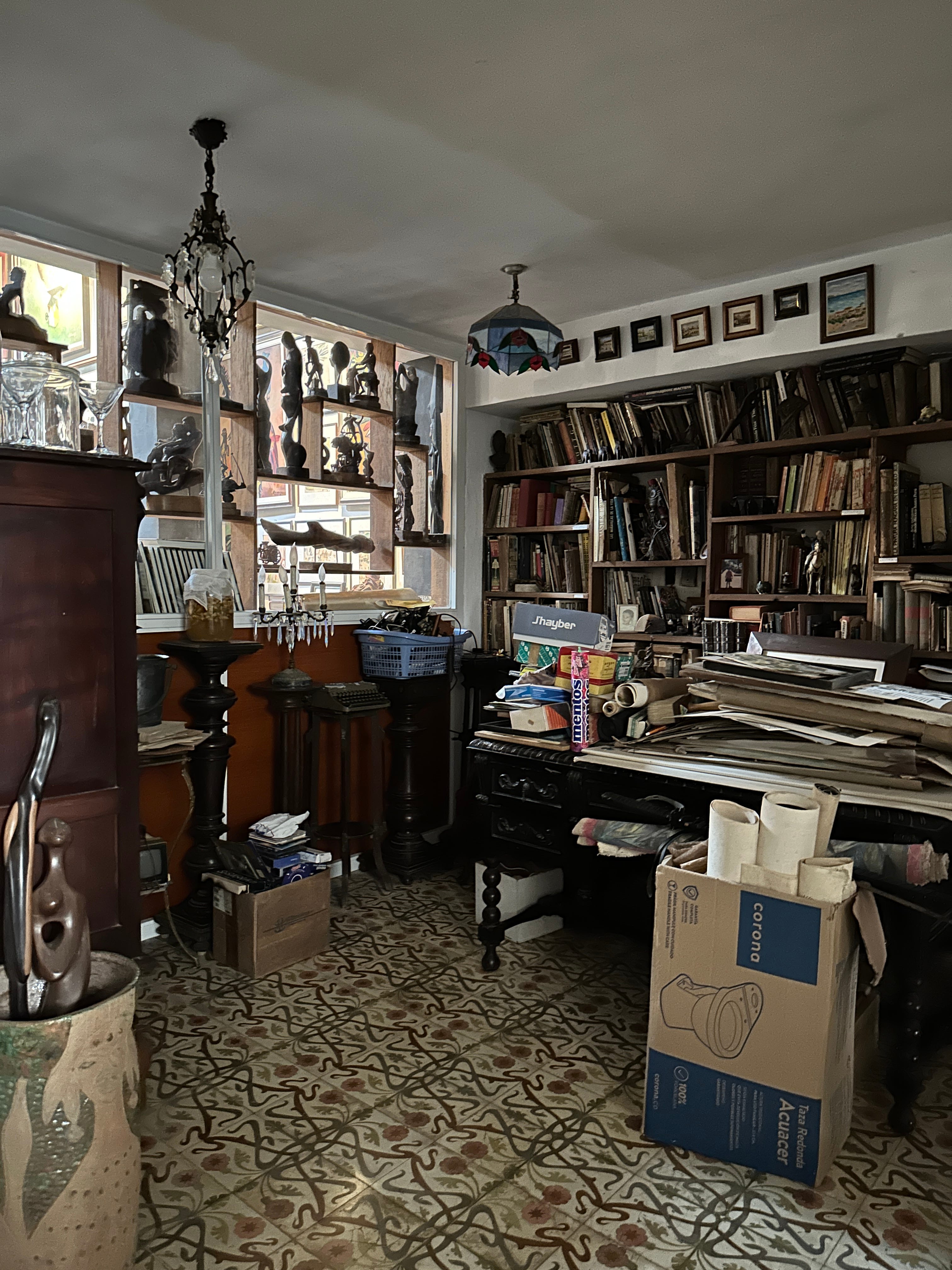
Art dealer’s study
Next, more strolling, ending up at a junk or antiquities dealer depending on your point of view. She’s always on the lookout for old issues of architectural and design magazines featuring Cuban architecture for Monty, who’s an architect and preservationist. She had a trove of them, and he picked up quite a few. She also had a number of boxes of old photos, snapshots really, the family kind from the ‘50s and ‘60s, black and white. People I’ll never know, never even be able to guess at, standing proudly together at some event, smiling up from a blanket at the beach, holding babies and dogs. These things always fascinate me wherever I see them. What happened, that these photos weren’t kept, and ended up in a shop, 60, 70 years after the moment they record?
Just so we don’t get too solemn, she also had a collection from the ‘30s and ‘40s of what used to be called racy pictures, wallet-sized photos of naked or semi-naked ladies.
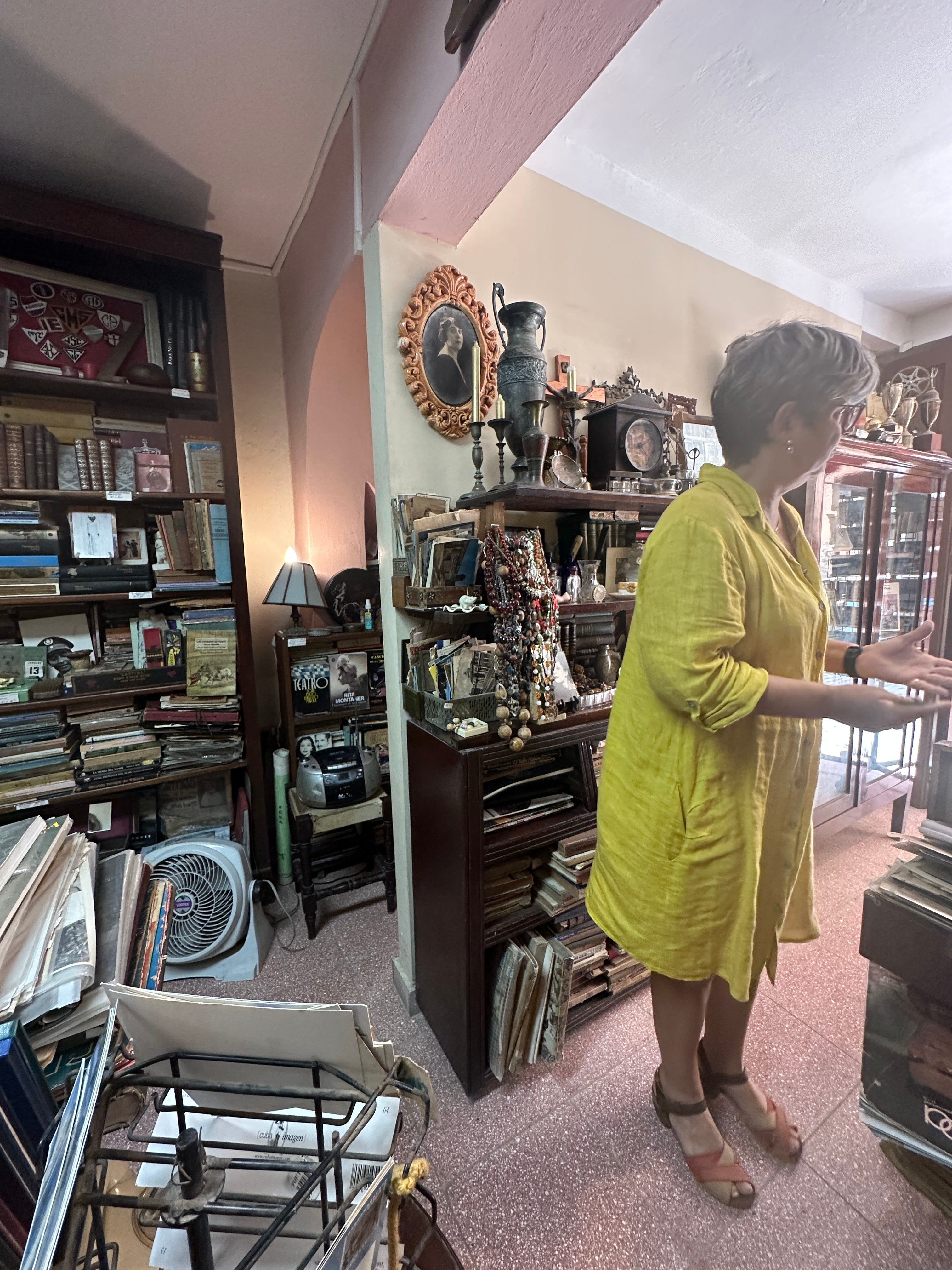
Junk or antiquities dealer in her junk or antiquities shop
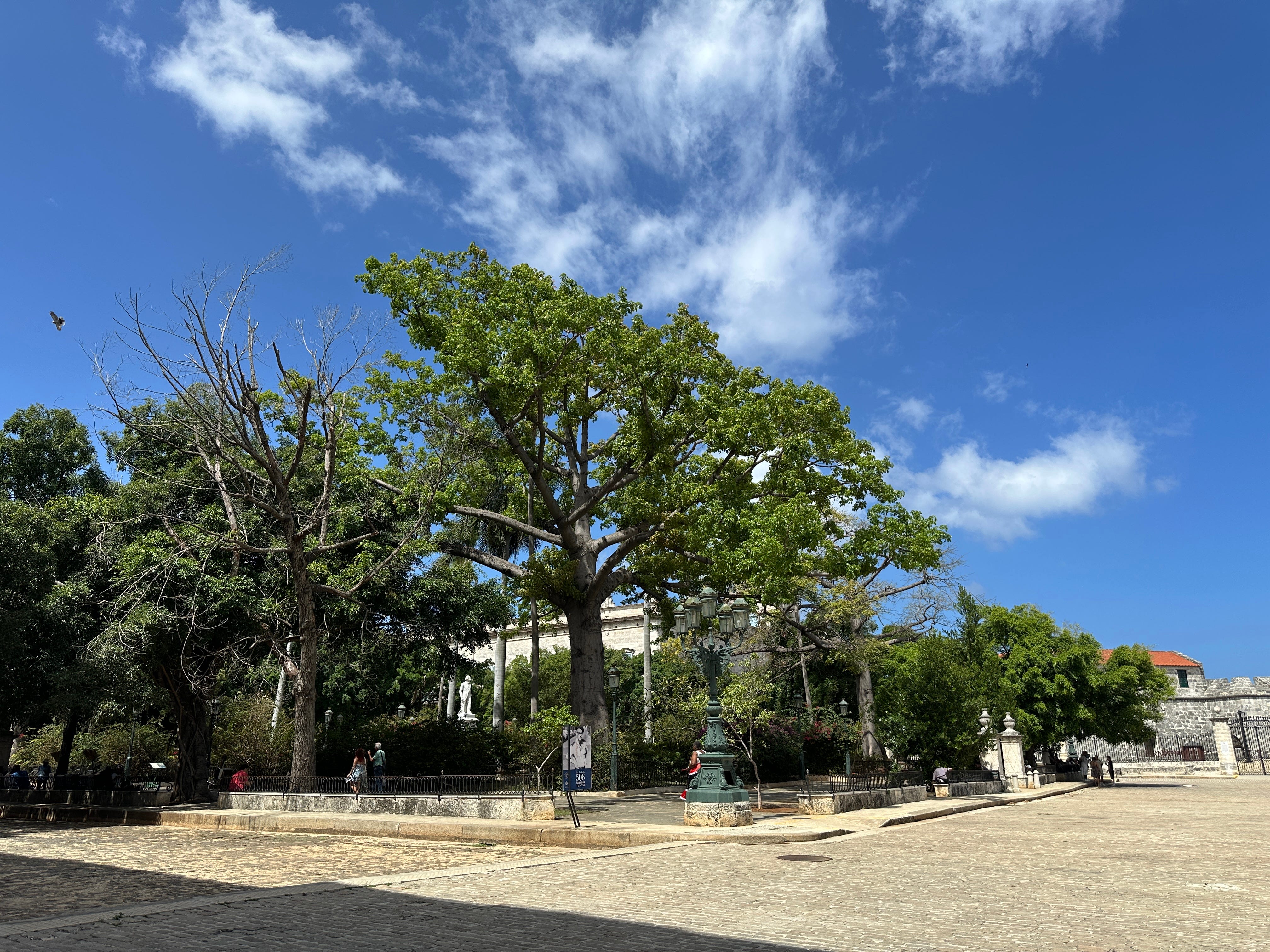
Park
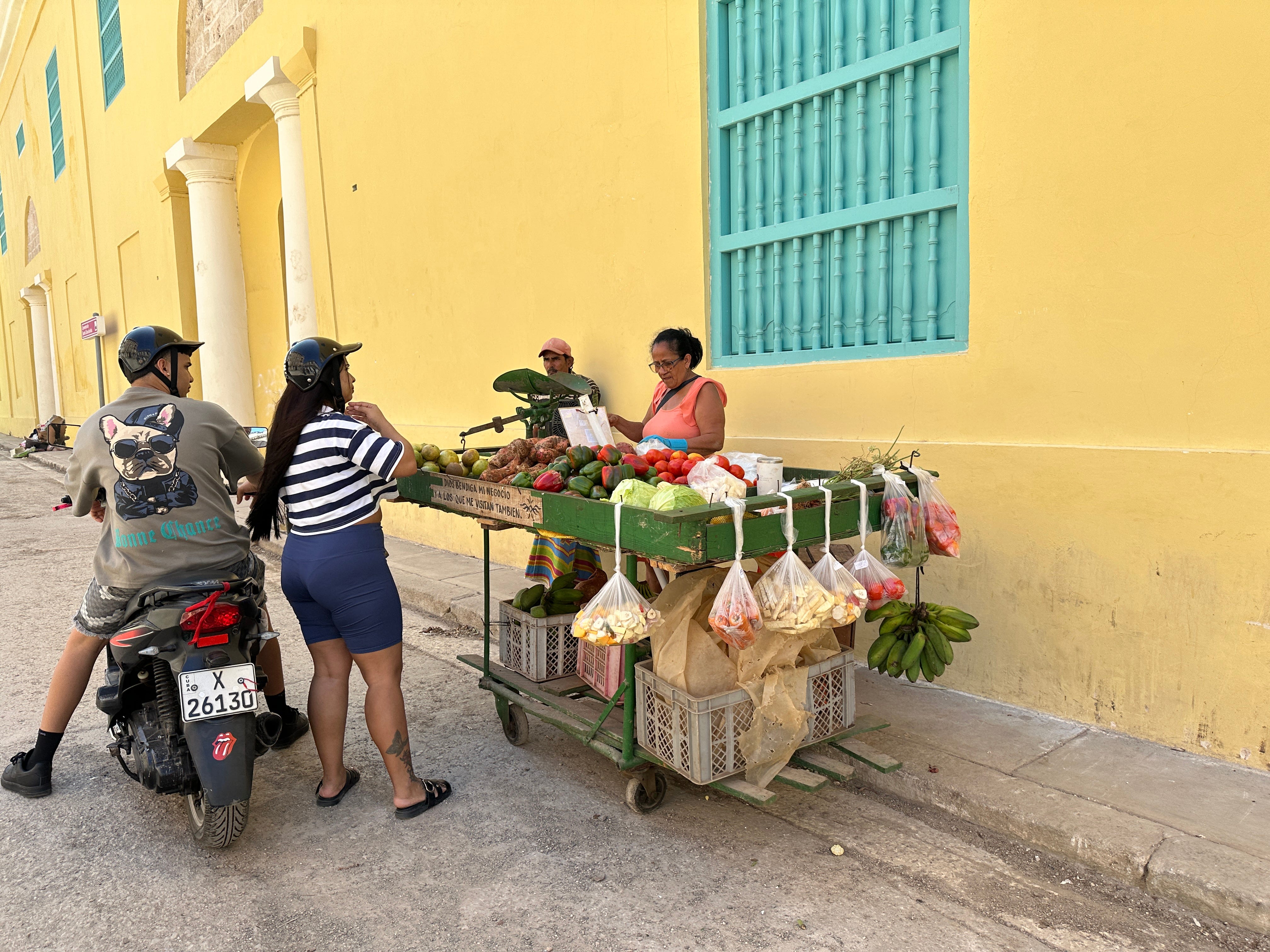
Street vendor
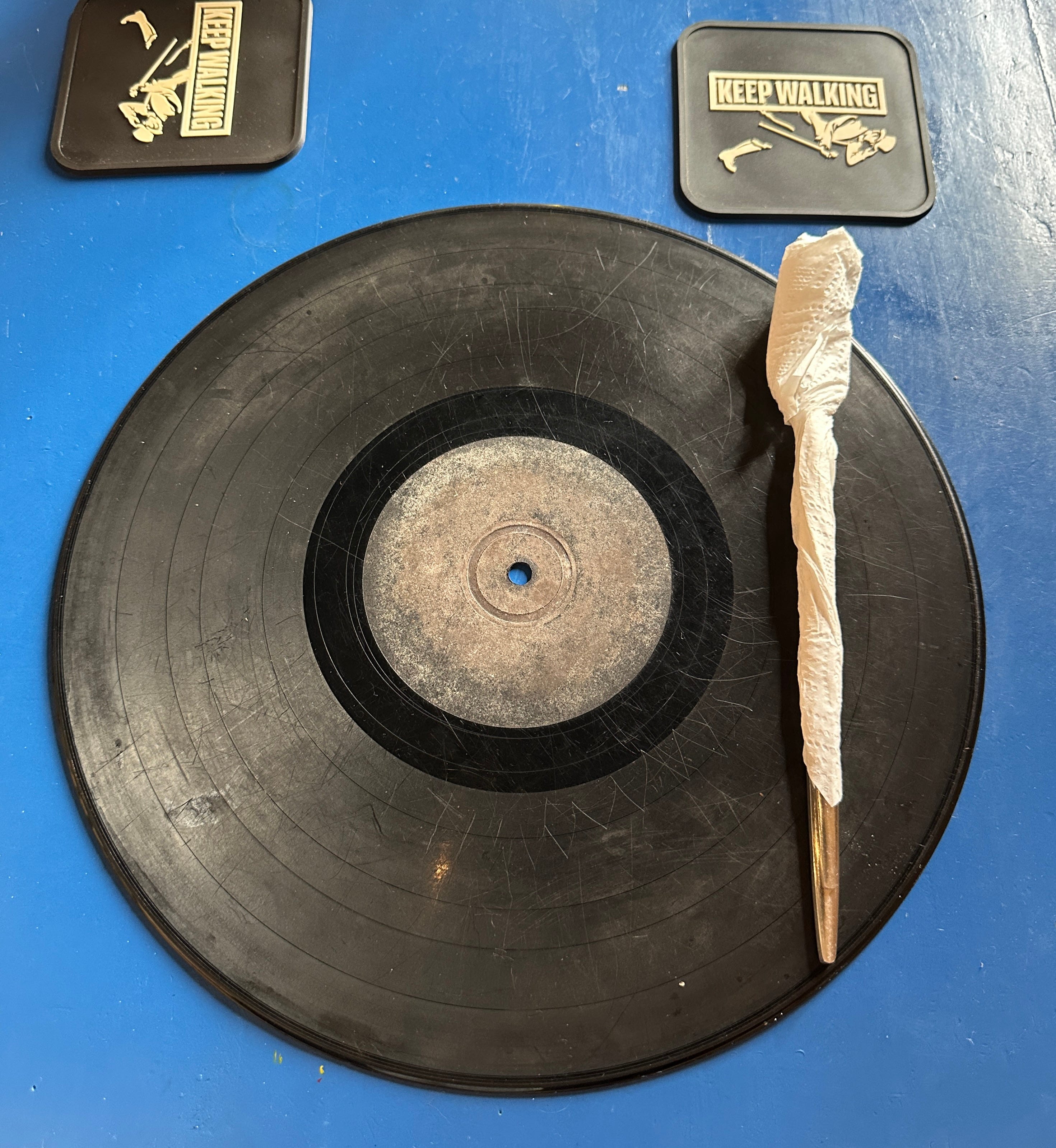
Next, we tried to go to a store founded by a Cuban woman who designs wonderful linen clothes which are made by the seamstresses in the upstairs of the shop. Last time here I bought a shirt and I was prepared to help support the seamstresses again, as was Luisa, but the shop was closed. Maybe we can go tomorrow. More strolling, then lunch at a fairly new, casual place on one of the Old Havana side streets. Forgot to take pictures of the food (!) but this was the placemat. Yup,that’s a 78.
So what’s the sense here, the feeling in the air? Times are hard, but when I was here in October times had slid so far from my last visit in 2019 that I expected the same slide from October to now, considering the cut off of oil from Venezuela and the threats of an even more complete US blockade and even an invasion. But surprisingly, that’s not what I’m seeing. There are fewer private cars and taxis, but not none; many hotels are closed because European and Canadian tourists aren’t coming (it’s not that they can’t come, but with the long-haul flights canceled they’d have to go through Miami or Mexico, which is both more expensive, and a pain if all you wanted was a vacation) but a lot of hotels remain open; the market was full of fruit and vegetables and street vendors are also selling them, which means so far they’ve found ways to bring them to market. (Go, donkeys!) The restaurants we’ve wanted to go to have been open, though with not as many customers as a few months ago and many fewer than 2019, which was the high of the Obama years. The electricity went out today, and the water last night, but they both came back on pretty fast. So things are tough, but not yet dire.
And we’ve also heard something else that’s intriguing. The art dealer was saying that in the past month or so he’s seen a few investors come around. They want to see what he has, but they’re really in Cuba to buy property. There seems to be a general feeling that things will turn around, and property now is so cheap — people are selling so they can move to the US, Canada, Spain — that investors are positioning themselves for the next stage. You can think of it as vulturing, which it is; but it also shows a faith in Cuba’s resilience.
Tomorrow, among other things, we’re going to visit Olimpia and family. They’ll have their own take on what’s happening and it should be very interesting to hear.
Great report SJ. So glad to hear that things aren’t looking dire. Can’t wait for the next post!
Apparently, Rubio may join y'all in Havana soon. But, it sure looks like you're making the best of your time and opportunities until his cloud arrives.
My mother had a cousin who used to hang out with Will Rogers at a bar in Havana in the '30s . . . I think that it was in a hotel (the International?) where my cousin and Will Rogers knew the owner, who was very generous with his hospitality towards them. I imagine you going to those and other such places, reveling in a city that doesn't eat its own history while selling off landmarks. (For now, anyway.)